
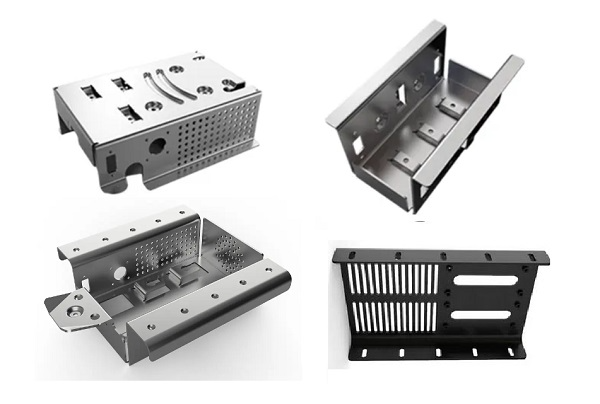
Aluminium sheet metal fabrication is a widely used manufacturing process that transforms flat aluminium sheets into functional parts and structures through cutting, bending, forming, and assembly. Because aluminium is lightweight, corrosion-resistant, and highly formable, it has become one of the most popular materials for sheet metal fabrication across industries such as construction, automotive, electronics, aerospace, and consumer products.
Compared with steel, aluminium offers a density of about 2.7 g/cm³, which is roughly one-third the weight of carbon steel, making it an ideal material for lightweight structural components. Additionally, aluminium’s natural oxide layer provides excellent corrosion resistance without requiring heavy protective coatings.
Modern aluminium sheet metal fabrication combines advanced equipment such as laser cutting systems, CNC press brakes, and automated welding robots to produce precise parts with high efficiency and repeatability. The following sections explore the key technical topics and industrial practices involved in aluminium sheet metal fabrication.
Key Knowledge Topics Related to Aluminium Sheet Metal Fabrication
- Fundamentals of aluminium sheet metal fabrication
- Common aluminium alloys used in sheet fabrication
- Cutting methods for aluminium sheet metal
- Bending and forming techniques for aluminium sheets
- Welding and joining methods for aluminium structures
- Surface finishing and corrosion protection
- Design guidelines for aluminium sheet metal parts
- Tolerance control and quality inspection
- Cost factors and production efficiency in sheet metal fabrication
- Industrial applications of aluminium sheet metal components
Fundamentals of Aluminium Sheet Metal Fabrication
Aluminium sheet metal fabrication refers to the process of converting flat aluminium sheets into finished parts using various forming and machining techniques. These processes typically include:
- cutting
- punching
- bending
- stamping
- welding
- finishing
The fabrication workflow usually follows these steps:
- CAD design of the part
- Material selection and sheet thickness determination
- Cutting and blanking
- Forming or bending operations
- Assembly and welding
- Surface finishing and inspection
Aluminium sheet thickness typically ranges from 0.5 mm to 6 mm for most fabrication applications, though thicker sheets may be used for structural components.
Common Aluminium Alloys Used in Sheet Fabrication
Selecting the correct aluminium alloy is critical because different alloys offer different mechanical properties, formability, and corrosion resistance.
Frequently Used Aluminium Alloys
| Alloy | Key Properties | Typical Applications |
|---|---|---|
| 5052 | excellent corrosion resistance | marine and outdoor enclosures |
| 6061 | high strength and weldability | structural parts |
| 3003 | excellent formability | HVAC panels |
| 7075 | extremely high strength | aerospace components |
For example, 5052 aluminium is commonly used in sheet metal fabrication because it has excellent resistance to saltwater corrosion and can be bent without cracking. Meanwhile, 6061 aluminium is widely used in structural applications due to its high strength and good machinability.