
Custom deep-drawn parts are one-piece components formed from flat sheet metal. A punch draws the sheet into a die cavity. The result is a seamless part with no welds or joints. Deep-drawn parts are stronger and leak-resistant. They are ideal for housings, enclosures, and containers.
What Is Deep Drawing?
Deep drawing is a metal forming process. It shapes a flat sheet into deep, hollow parts. The process stretches the material into the die. It differs from conventional stamping. Deep-drawn parts keep one-piece strength and a clean surface.
- Seamless construction, no welding required
- Uniform wall thickness with proper tooling
- High strength-to-weight ratio
- Excellent surface finish
Deep Drawn Parts We Produce
- Enclosures and housings for electronics and medical devices
- Cups, bowls and containers
- Motor housings and casings
- Filters and fittings
- Components for fire fighting equipment
- Components for automotive, energy and home appliances
Our Deep Drawing Capabilities
See the full equipment list on our sheet metal fabrication services page.🔧Click here.→
Materials for Deep Drawing
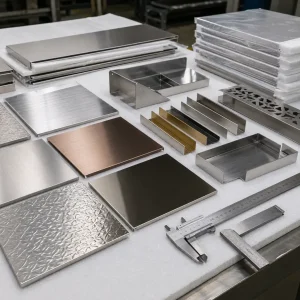
Deep drawing puts real demands on the material. The sheet must stretch without cracking or thinning. Material choice determines strength, surface quality, and cost.
-
- Stainless steel (304, 316) — excellent formability and corrosion resistance. Ideal for medical, food and marine components.
- Aluminum — lightweight with good corrosion resistance. Common in automotive, electronics and appliance parts.
- Carbon steel — strong, formable and cost-effective. Widely used for industrial housings and containers.
- Brass & copper — conductive and decorative. Used for fittings, terminals and special components.
- Coated & pre-painted sheet — fewer finishing steps after forming.
Material thickness follows your drawing and draw ratio.
Design Considerations & Project Process
Deep drawing rewards early engineering review. Our engineers check your design before tooling starts. Good design choices protect your budget across the whole project.
- Wall thickness and draw depth affect tooling design
- Corner radii influence material flow
- Draw ratio decides how many stages are needed
- Early review avoids cracks, wrinkles, and rework
Once these design points are settled, we move into the project workflow. The steps below take your part from drawing to shipment.
- Drawing review and process proposal
- Multi-stage tooling design
- Sample parts and dimensional verification
- Production runs with in-process checks
- Final inspection and shipment
Real Project Result
A representative project from our production history—over 70,000 different types of custom metal parts delivered to date:
Deep-drawn protective cap for industrial equipment
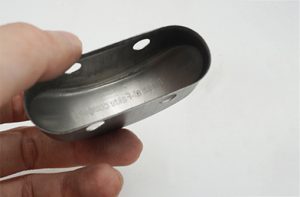
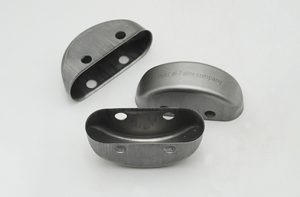
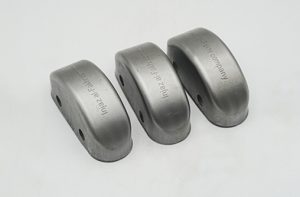
An equipment maker needed a one-piece protective cap with a smooth, curved shape. Welded construction added cost and failure points. Deep drawing formed the cap in one seamless piece.
- Part: deep-drawn metal protective cap
- Process: deep drawing → hole piercing → marking → surface finishing
- Key challenge: uniform wall thickness across the curved dome, without cracks
- Our solution: multi-stage draw tooling with controlled material flow
- Production: 30,000 pcs per order
- Quality result: dome profile and hole positions verified per drawing
Why Choose Us for Custom Deep Drawn Parts?
- Press capacity up to 400T for deep and large parts
- Multi-stage tooling designed in-house
- Seamless parts with no welding risk
- 19 engineers support your design early
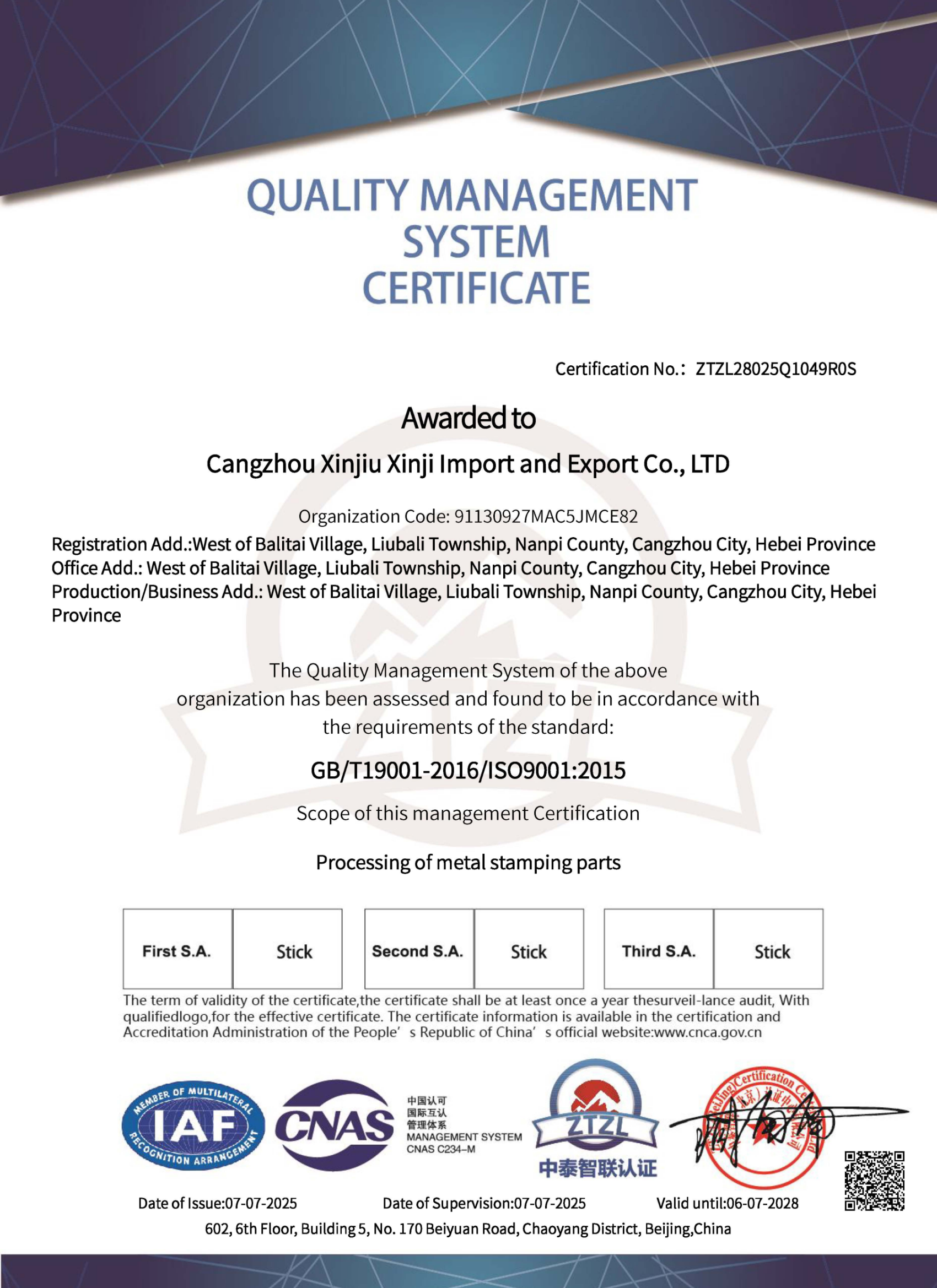
- ISO 9001:2015 certified quality management
- Export experience to Europe and North America
Frequently Asked Questions
What is the difference between deep drawing and stamping?
Stamping forms shallow shapes from sheet metal. Deep drawing pulls material into deeper, hollow forms. Deep-drawn parts are seamless and stronger.
What is the minimum order quantity for custom deep drawn parts?
There is no fixed MOQ. Tooling cost depends on part size and depth. Prototyping starts from a single piece.
Which materials can be deep drawn?
Stainless steel, aluminum, carbon steel, brass, and copper. Your material grade is confirmed during drawing review.
Can you help with deep-drawn part design?
Yes. Our engineers review your design before tooling. We advise on radii, wall thickness, and draw stages.
Act Immediately! Please Hand Over Your Project To Us!
Ready to start your deep drawn parts project? Get a quote for your custom deep drawn parts today.
Send your drawings in any format; our engineers will review manufacturability at no cost. You will receive a clear proposal with process, pricing, and lead time within 8 hours.