
Stainless steel fabrication starts with a grade decision, not a machine decision. The grade sets the environment, the weld behavior and the price. Get it right and the part lasts decades. Get it wrong and the corrosion starts in year one, in a place the drawing never mentioned. Hebei Weizhi is our brand, established in 2023. It is backed by our Nanpi factory, producing since 1999. This guide walks the grade choice, the fabrication chain and the checks that protect the finish. The service side, with the equipment and the routes, is on our stainless steel fabrication service page.
Grades First: 304 and 316
| Grade | Where it lives | What adds cost |
|---|---|---|
| 304 | Indoor, food contact, general outdoor | The baseline stainless |
| 316 | Coastal, chemical, high-chloride air | Molybdenum, the chloride defense |
Three questions pick the grade. Where will the part live, for how long, and what touches it? Indoor and food-contact work is 304 country. Salt air and chemical wash-down is 316 country. The environment decides; the budget refines, and only after the decision. The applications are in our post on corrosion-resistant stainless steel parts. It lists the parts we have built in each grade. Name the grade on the drawing, and we confirm the stock and the mill before the quote is final.
The Fabrication Chain
- Cut: the laser runs the profile. Stainless cuts cleaner than mild steel, and the edge decides the rest.
- Bend: stainless springs back more and marks the tool more. The radius and the force move with the grade.
- Weld: where the corrosion resistance is made or lost, line by line.
- Finish: the surface that meets the environment, daily.
-
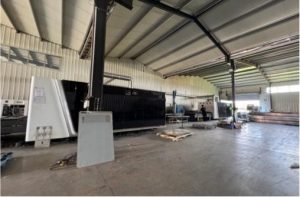
- laser-cutting-equipment
-
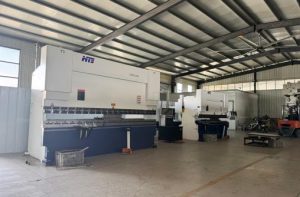
- bending-equipment
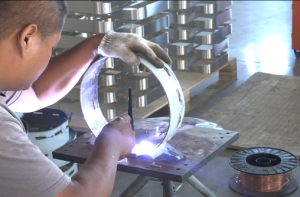
Every step is in our factory, under one roof. The cut is one stop, custom laser cutting. The bend is the next, custom metal bending. One roof means the edge that leaves the laser is the same edge the weld sees. There is no supplier between the steps to blame when a dimension is wrong.
Welding Stainless: Where It Goes Wrong
- Contamination: carbon steel dust on a 304 joint starts the rust there.
- Heat: the zone around the weld loses protection if the heat lingers.
- Color: the brown scale is not decoration; it is the metal telling you.
- Fix: pickling and passivation bring the protection back, on that zone.
A stainless weld is a corrosion decision, dressed up as a join. The joint that looks straight but lost its protection will fail at the line, not at the surface. Our weld route, with the settings and the post-treatment, is on the custom metal welding page. The rule is short: clean before, control the heat during, passivate after. Skip one and the line tells on it within a season.
Finishes, in Plain Terms
- 2B: the mill finish, matte, the working surface.
- Brushed: the visible-equipment standard, grain one direction.
- Mirror: the display surface, ground and polished.
- Passivated: not a look, a state: the surface chemistry restored.
Name the finish and the grade together, on the same line of the drawing. “Brushed” without the grade is a family, not a specification. The passivation step is the one buyers forget, and the one that matters most outdoors. It is a check, not a coat: it restores what the weld and the handling took away.
The Checks That Matter
- Material: the mill certificate matches the grade on the drawing, at intake.
- Dimension: the first article measured against the drawing, datum by datum.
- Weld zone: the heat-affected line checked for scale and for the passivation after.
- Finish: the grain direction, the color standard, the absence of tool marks.
Four checks, in that order, and the order is the argument. A wrong grade fails every later check; a clean grade makes them fast. The tools and the records behind each check are on our quality control page. Stainless steel fabrication is judged at the dock, years later. These four checks are how the part earns that judgment at the factory, first.
How We Run It
- 304 and 316 as the daily grades, 201 available for economy indoor work.
- 72-hour samples on qualifying parts, with no sample charge.
- Mill certificate at intake, FAI at the first article, final QC before packing.
- ISO 9001:2015 at group level, the certificate holder named on our certificates page.
- Since 1999 at the Nanpi factory: 70,000+ different types of custom metal parts, stainless among them.
The brand signs the contract; the factory runs the machines. That is the dual-track model, and it is the reason the sample in your hand carries the records behind it. Send the drawing with the grade and the environment, and the quote answers both. That is how stainless steel fabrication starts, on our side of the table.
Frequently Asked Questions
Should I choose 304 or 316 for my part?
Indoor and food contact: 304. Coastal, chemical or wash-down environments: 316. The environment decides first, the budget refines after. Name the location on the drawing and we confirm the grade.
Can you make food-grade stainless parts?
Yes. The grade is 304, the finish is the smooth one, and the passivation is the check. The mill certificate travels with the batch, so your audit finds the paper, not a promise.
What is passivation, and why does it matter?
It restores the surface chemistry after cutting, bending and welding. The weld zone loses protection under heat; passivation gives it back. Outdoors, it is the difference between the line holding and the line rusting.
Does stainless cost more than mild steel?
The material line does, and the weld line can, if the heat is uncontrolled. The forming line is close. Run the part both ways on the quote, and the total, line by line, shows the real difference.
Do you provide material certificates?
Yes, from the mill, matched to the grade on the drawing at intake. The certificate sits in the order file with the FAI and the final report. One file per batch, from the coil to the dock.
Start Your Stainless Project
Send your drawing — sample and quote in days.
WhatsApp: +86 131 1007 5546 | Email: claire@hbweizhi.cn
Or contact us online.